Home > Articles by Board Members, Fellows and Staff
Articles by Board Members, Fellows and Staff
HRNK Publications
Articles by Board Members, Fellows and Staff
HRNK in Focus
North Korean Human Rights Resource Center
Timeline
Policy Recomendations
Founding Documents
[RFA Exclusive Interview] Roberta Cohen “North Korea represses news of sanctions on Kim Jong-un to block criticism of his legiti
Roberta Cohen, HRNK Co-Chair Emeritus
Jul 25, 2016
The US recently instituted the first sanctions against North Korea Worker’s Party Chairman Kim Jong-un for his human rights violations, but the party has yet to inform the citizens of this news, and is thoroughly restricting related information. Roberta Cohen, an American North Korea human rights activist, interprets these information restrictions as a desperate countermeasure by Kim to block any criticism that would undermine his legitimacy. At this time, we will listen to this expert’s views on this issue during our exclusive interview with Cohen, who is Co-Chair Emeritus of the US non-profit organization Committee for Human Rights in North Korea. Byun Chang-seop reporting.
The views expressed in this article are those of the author and do not necessarily represent the views of, and should not be attributed to, the Committee for Human Rights in North Korea (HRNK).
North Korea: Why Human Rights Must Come First
Carl Gershman
Feb 19, 2016
In the wake of a North Korean rocket launch in clear violation of international sanctions, there is growing skepticism about the effectiveness of negotiations with North Korea. The Kim regime sees the relinquishment of its nuclear capabilities as an existential threat. It naturally responds negatively to the international community’s attempts to persuade it to do so, in spite of any economic and political benefits it might receive in exchange. Therefore, Gershman proposes a paradigm shift: the US and its allies should adopt an integrated approach to North Korea that not only aims to deter aggressive behavior, but also to defend human rights, thereby empowering the population to reject the closed, repressive nature of the current totalitarian system.
The views expressed in this article are those of the author and do not necessarily represent the views of, and should not be attributed to, the Committee for Human Rights in North Korea (HRNK).
Empty marching in Korea
Abraham Cooper and Greg Scarlatoiu
Apr 26, 2015
A group of feminists led by Gloria Steinem announced a plan to stage a peace march starting in Pyongyang and crossing through the DMZ to Seoul, urging a formal end to the Korean War. HRNK Board Member Rabbi Abraham Cooper and HRNK Executive Director Greg Scarlatoiu caution that permission to march through North Korea, unlikely as it is, would merely be a cosmetic gesture intended to draw attention away from the many state-sanctioned human rights abuses. Instead, Cooper and Scarlatoiu suggest a protest at the border with China, which many North Koreans refugees cross to escape the Kim regime.
The views expressed in this article are those of the author and do not necessarily represent the views of, and should not be attributed to, the Committee for Human Rights in North Korea (HRNK).
Must UN Agencies Also Fail in North Korea?
Roberta Cohen, HRNK Co-Chair
Apr 21, 2015
In 2011, a United Nations Panel of Experts found the UN system to have acquitted itself poorly in the face of widespread human rights violations in Sri Lanka. According to a 2012 Internal Review, some field staff “failed in their mandates to protect people,” some “under-reported Government violations,” and some in senior positions at headquarters “suppressed reporting efforts by their field staff.” Overall, these panels told the Secretary-General that the UN “did not adequately invoke principles of human rights”—the foundation of the organization—but instead, did “what was necessary to avoid confrontation with the government.”[1]...
To read more please follow the link to the 38North website.
The views expressed in this article are those of the author and do not necessarily represent the views of, and should not be attributed to, the Committee for Human Rights in North Korea (HRNK).
The Kim Regime's Atrocities, and the Road Ahead
Carl Gershman
Mar 05, 2015
Last month marked the one-year anniversary of the report of the UN Human Rights Council’s Commission of Inquiry (COI) on human rights in North Korea. UN reports often have very limited impact and resonance. But this report was different. Its impact has already been significant, which is testimony to the quality of the work done by the three commissioners—the Australian judge Michael Kirby, who chaired the body; the Indonesian lawyer and politician Marzuki Darusman, who is also the UN special rapporteur for North Korea; and the Serbian human rights defender Sonja Biserko.
The views expressed in this article are those of the author and do not necessarily represent the views of, and should not be attributed to, the Committee for Human Rights in North Korea (HRNK).
A Human Rights Dialogue with North Korea: Real or Illusory?
Roberta Cohen, HRNK Co-Chair
Oct 16, 2014
North Korea has made a number of intriguing gestures recently on human rights. At the United Nations, its Foreign Minister announced his country’s readiness to hold a “human rights dialogue with countries not hostile to it.”[1] The North Korean Workers’ Party of Korea (WPK) International Affairs Secretary, on a visit to Brussels, offered a human rights dialogue to the European Union (EU).[2] Even earlier, a North Korean official told a United Nations meeting that his government would accept some of the recommendations put forward by states in the Universal Periodic Review (a UN process that evaluates all countries’ human rights records).[3] And a Foreign Ministry official admitted to the press the existence of “reform through labor detention centers” in North Korea.[4]
To read the full article, please click here.
The views expressed in this article are those of the author and do not necessarily represent the views of, and should not be attributed to, the Committee for Human Rights in North Korea (HRNK).
CHINA’S FORCED REPATRIATION OF NORTH KOREAN REFUGEES INCURS UNITED NATIONS CENSURE
Roberta Cohen, HRNK Co-Chair
Jul 02, 2014
The UN Commission of Inquiry (COI), set up in 2013 to investigate widespread, systematic, and grave human rights violations in North Korea, has strongly implicated China in North Korea’s commission of crimes against humanity because of its forced repatriation of North Korean refugees and asylum seekers who are severely punished once returned. China, however, insists that North Koreans exiting without permission are ‘economic migrants,’ not refugees, and that deportations are essential to maintaining its national security, social order, and border controls, as well as the stability of the Korean Peninsula. Although a preponderance of states at the United Nations have rejected China’s position, China has continued to subordinate UN human rights and refugee standards to its immediate political objectives and deny North Koreans their right to leave their country and seek asylum abroad. As greater international pressure focuses on China’s policies and practices, a vigorous international effort is needed to protect North Korean refugees and encourage China to see that its interests may be better served over the longer term by modifying its policies.
The views expressed in this article are those of the author and do not necessarily represent the views of, and should not be attributed to, the Committee for Human Rights in North Korea (HRNK).
Human Rights in North Korea: Addressing the Challenges
Roberta Cohen, HRNK Co-Chair
Dec 31, 2013
An international response to North Korea’s egregious human rights record has begun to take shape. Building on the work of NGOs and UN human rights experts, the United Nations Human Rights Council in 2013 set up a Commission of Inquiry to investigate whether North Korea’s systematic, widespread and grave violations constitute crimes against humanity for which DPRK officials could be held accountable. Although the COI was denied access to North Korea, this article argues that its findings and report are based on persuasive evidence and can have impact if a broad range of actors — governments, international organizations, NGOs and civil society — are mobilized. The author puts forward an array of strategies to more fully engage the world community and argues that the proactive carrying out of such initiatives may work to promote human rights in North Korea.
Key Words: North Korea, Human Rights, Humanitarian, United Nations, Commission of Inquiry
The views expressed in this article are those of the author and do not necessarily represent the views of, and should not be attributed to, the Committee for Human Rights in North Korea (HRNK).
A Voice from the North Korean Gulag
Carl Gershman
Apr 01, 2013
“The message of this searing camp memoir, and of everything else that we have come to know about the North Korean dictatorship, is that there is no greater evil in the world today,” writes NED President Carl Gershman in his review essay of Blaine Harden’s Escape from Camp 14: One Man’s Remarkable Odyssey from North Korea to Freedom in the West.
The article will appear in the April issue of the Journal of Democracy.
The views expressed in this article are those of the author and do not necessarily represent the views of, and should not be attributed to, the Committee for Human Rights in North Korea (HRNK).
North Korea Faces Heightened Human Rights Scrutiny
Roberta Cohen, HRNK Co-Chair
Mar 21, 2013
On March 21, 2013 the United Nations Human Rights Council, a body of 47 states, adopted by consensus a resolution to establish a commission of inquiry (COI) into North Korea’s “systematic, widespread and grave violations of human rights.”[1] The commission is to be composed of three experts who will intensively investigate for a period of one year the human rights violations perpetrated by North Korea’s government with a view to ensuring “full accountability, in particular where these violations may amount to crimes against humanity” [emphasis added].
The views expressed in this article are those of the author and do not necessarily represent the views of, and should not be attributed to, the Committee for Human Rights in North Korea (HRNK).
The views expressed in these articles are those of the authors and do not necessarily represent the views of, and should not be attributed to, the Committee for Human Rights in North Korea (HRNK).
In this submission, HRNK focuses its attention on the following issues in the DPRK: The status of the system of detention facilities, where a multitude of human rights violations are ongoing. The post-COVID human security and human rights status of North Korean women, with particular attention to sexual and gender-based violence (SGBV). The issue of Japanese abductees and South Korean prisoners of war (POWs), abductees, and unjust detainees.
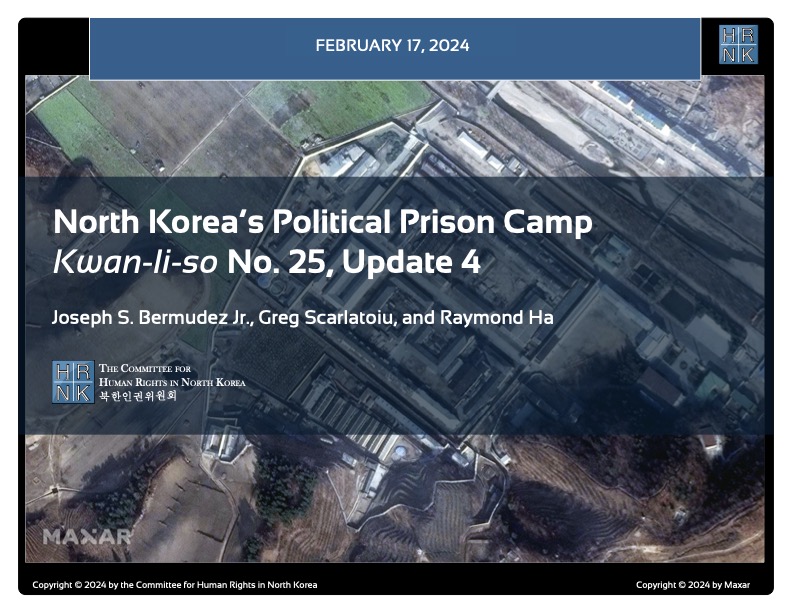
This report provides an abbreviated update to our previous reports on a long-term political prison commonly identified by former prisoners and researchers as Kwan-li-so No. 25 by providing details of activity observed during 2021–2023. This report was originally published on Tearline at https://www.tearline.mil/public_page/prison-camp-25.
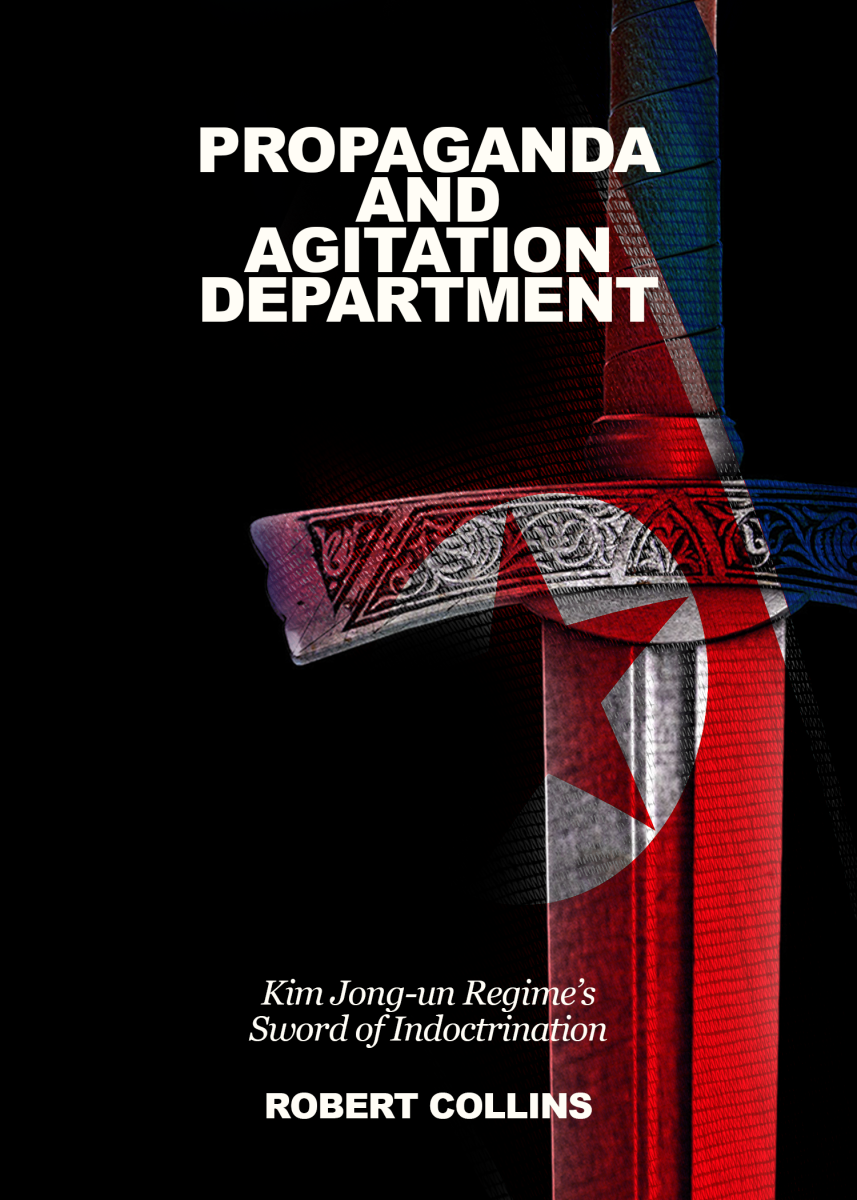
This report explains how the Kim regime organizes and implements its policy of human rights denial using the Propaganda and Agitation Department (PAD) to preserve and strengthen its monolithic system of control. The report also provides detailed background on the history of the PAD, as well as a human terrain map that details present and past PAD leadership.
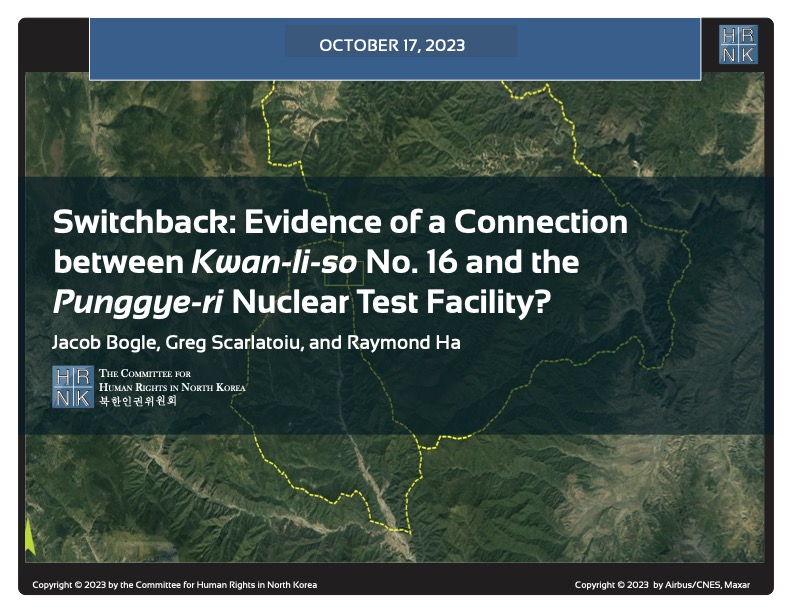
Oct 17, 2023
HRNK's latest satellite imagery report analyzes a 5.2 km-long switchback road, visible in commercial satellite imagery, that runs from Testing Tunnel No. 1 at North Korea's Punggye-ri nuclear test facility to the perimeter of Kwan-li-so (political prison camp) no. 16.
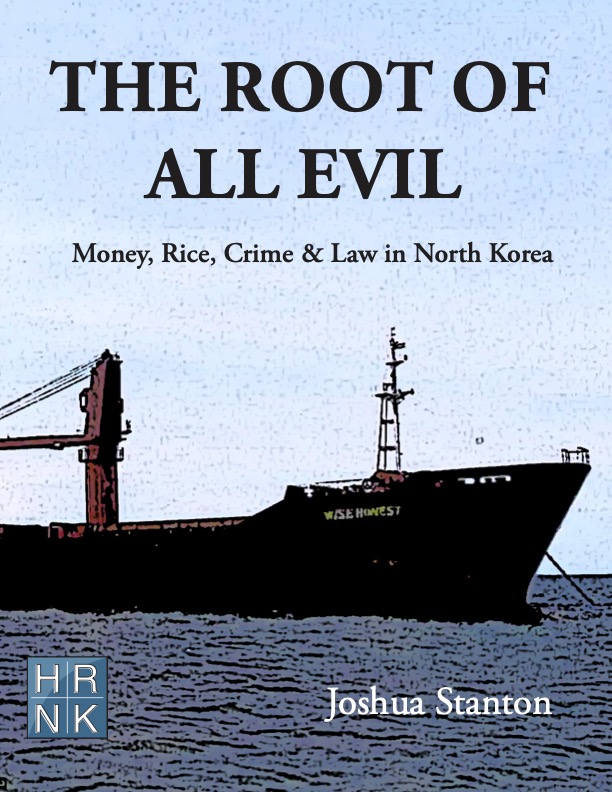
This report proposes a long-term, multilateral legal strategy, using existing United Nations resolutions and conventions, and U.S. statutes that are either codified or proposed in appended model legislation, to find, freeze, forfeit, and deposit the proceeds of the North Korean government's kleptocracy into international escrow. These funds would be available for limited, case-by-case disbursements to provide food and medical care for poor North Koreans, and--contingent upon Pyongyang's progress
For thirty years, U.S. North Korea policy have sacrificed human rights for the sake of addressing nuclear weapons. Both the North Korean nuclear and missile programs have thrived. Sidelining human rights to appease the North Korean regime is not the answer, but a fundamental flaw in U.S. policy. (Published by the National Institute for Public Policy)
Sep 26, 2022
North Korea’s forced labor enterprise and its state sponsorship of human trafficking certainly continued until the onset of the COVID pandemic. HRNK has endeavored to determine if North Korean entities responsible for exporting workers to China and Russia continued their activities under COVID as well.
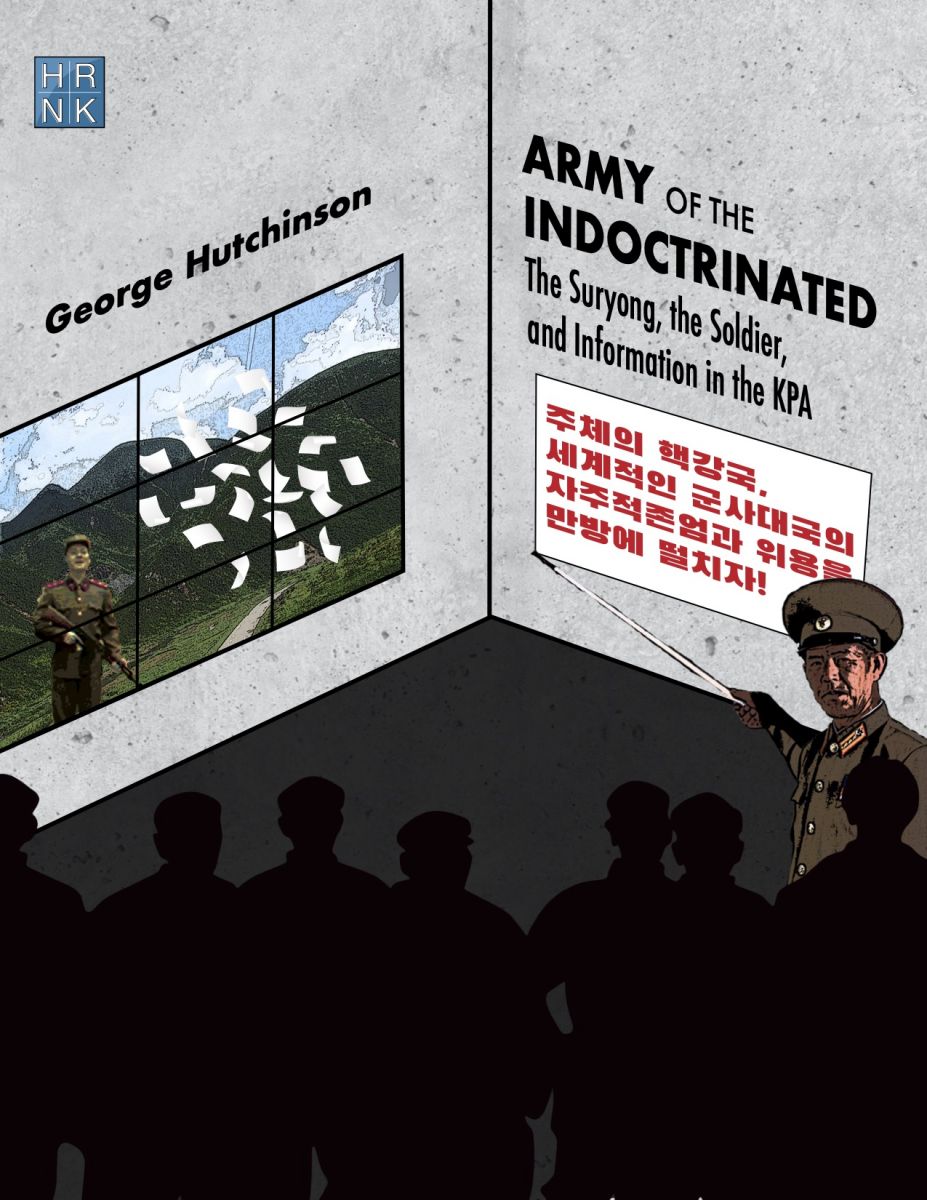
George Hutchinson's The Suryong, the Soldier, and Information in the KPA is the second of three building blocks of a multi-year HRNK project to examine North Korea's information environment. Hutchinson's thoroughly researched and sourced report addresses the circulation of information within the Korean People's Army (KPA). Understanding how KPA soldiers receive their information is needed to prepare information campaigns while taking into account all possible contingenc
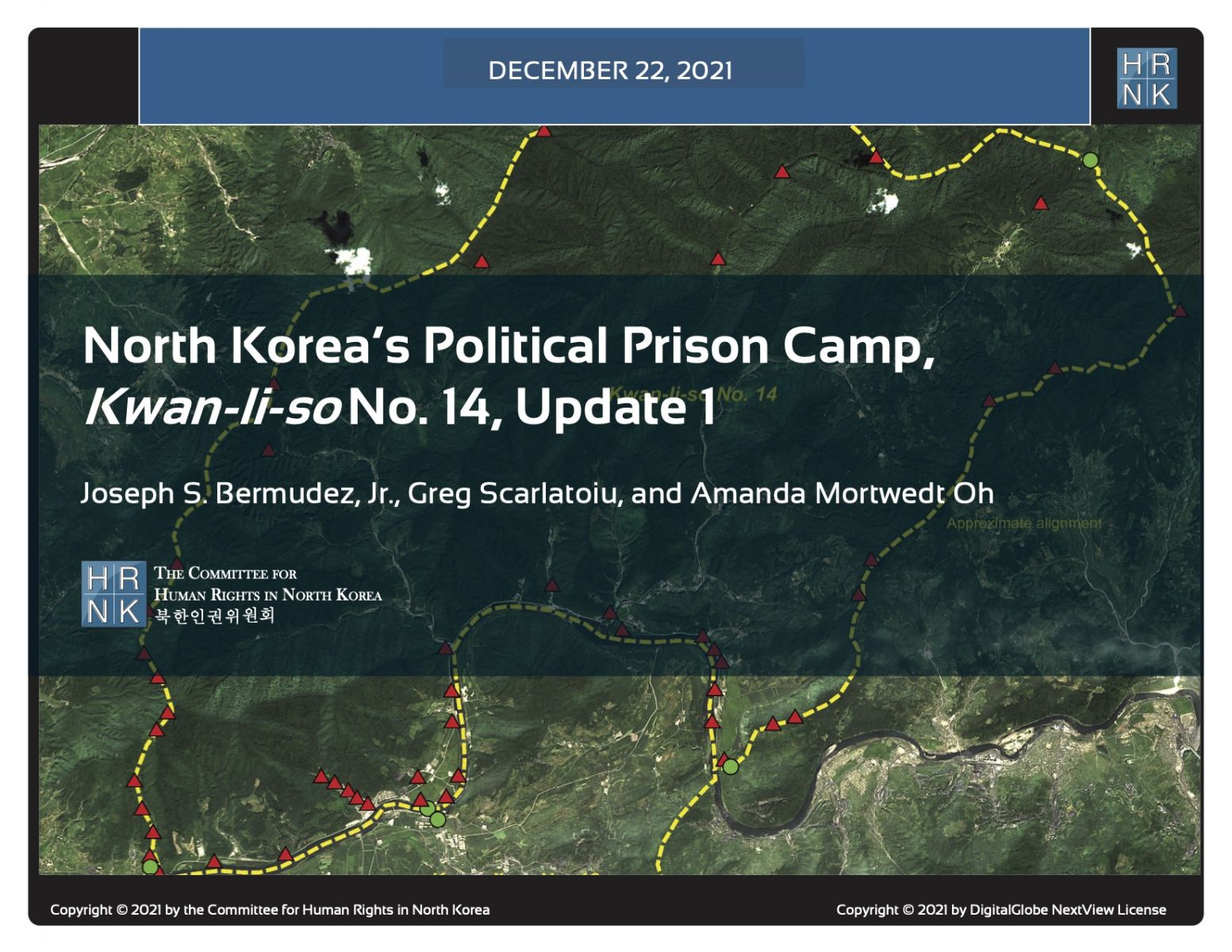
This report is part of a comprehensive long-term project undertaken by HRNK to use satellite imagery and former prisoner interviews to shed light on human suffering in North Korea by monitoring activity at political prison facilities throughout the nation. This is the second HRNK satellite imagery report detailing activity observed during 2015 to 2021 at a prison facility commonly identified by former prisoners and researchers as “Kwan-li-so No. 14 Kaech’ŏn” (39.646810, 126.117058) and
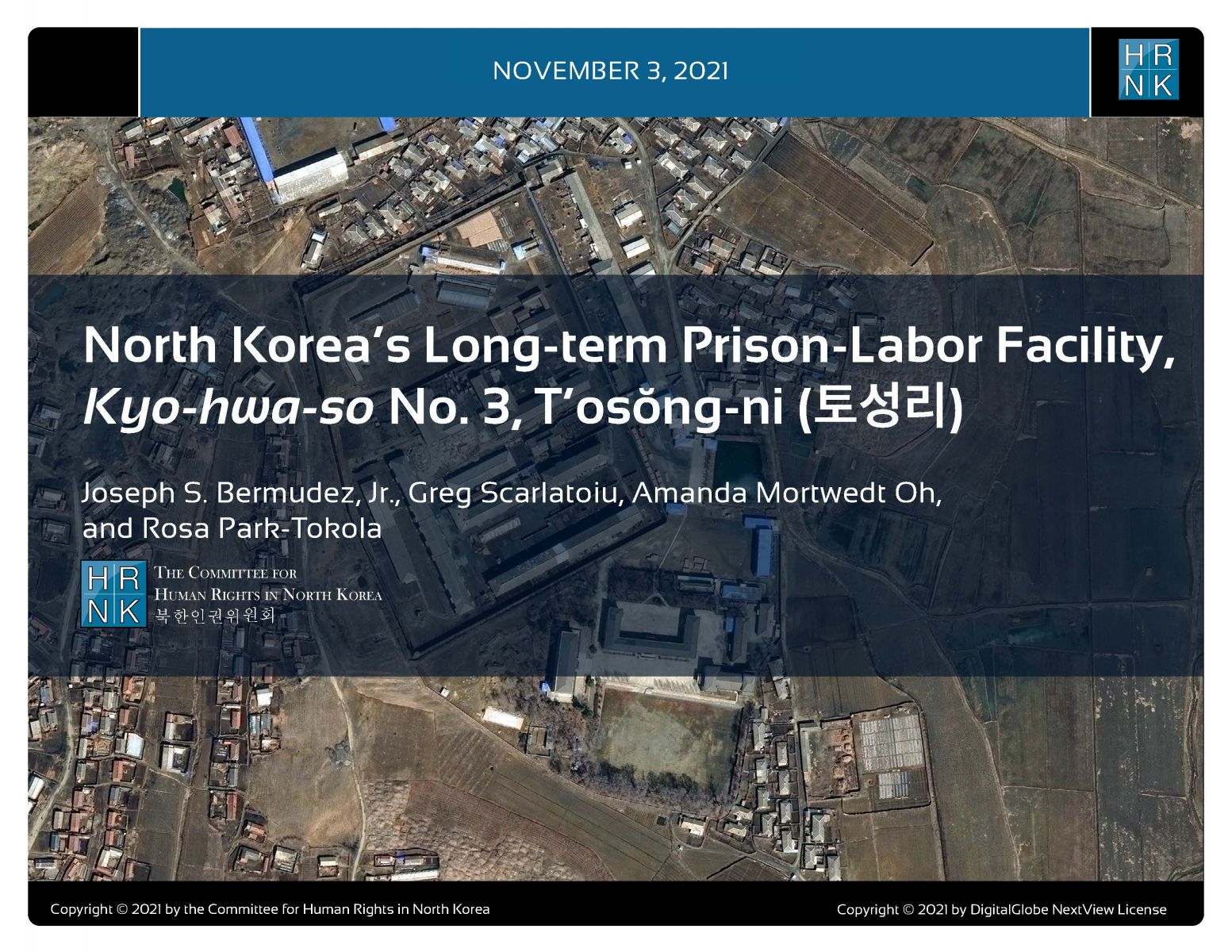
This report is part of a comprehensive long-term project undertaken by HRNK to use satellite imagery and former prisoner interviews to shed light on human suffering in North Korea by monitoring activity at civil and political prison facilities throughout the nation. This study details activity observed during 1968–1977 and 2002–2021 at a prison facility commonly identified by former prisoners and researchers as "Kyo-hwa-so No. 3, T'osŏng-ni" and endeavors to e
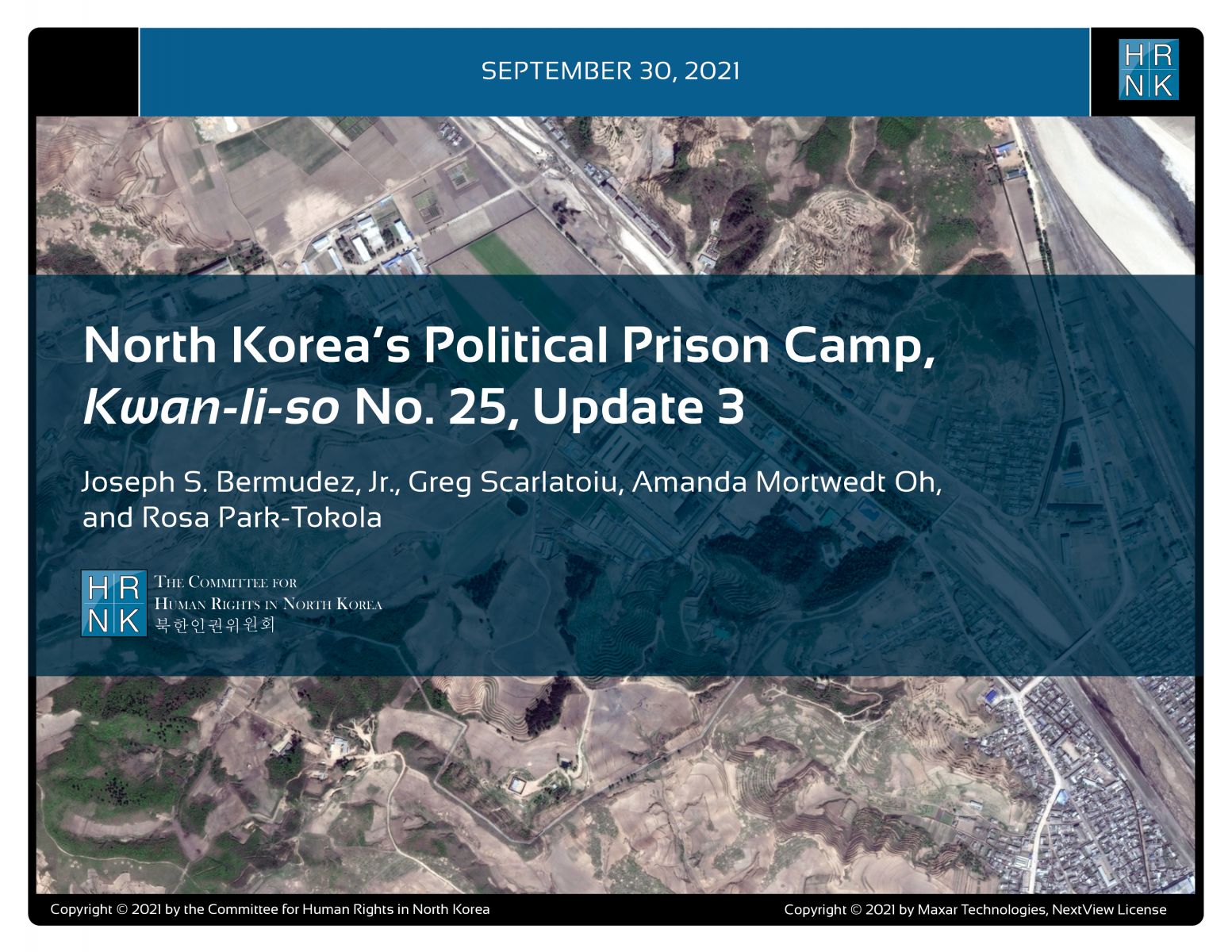
This report is part of a comprehensive long-term project undertaken by HRNK to use satellite imagery and former detainee interviews to shed light on human suffering in the Democratic People’s Republic of Korea (DPRK, more commonly known as North Korea) by monitoring activity at political prison facilities throughout the nation. This report provides an abbreviated update to our previous reports on a long-term political prison commonly identified by former prisoners and researchers as Kwan-li-so
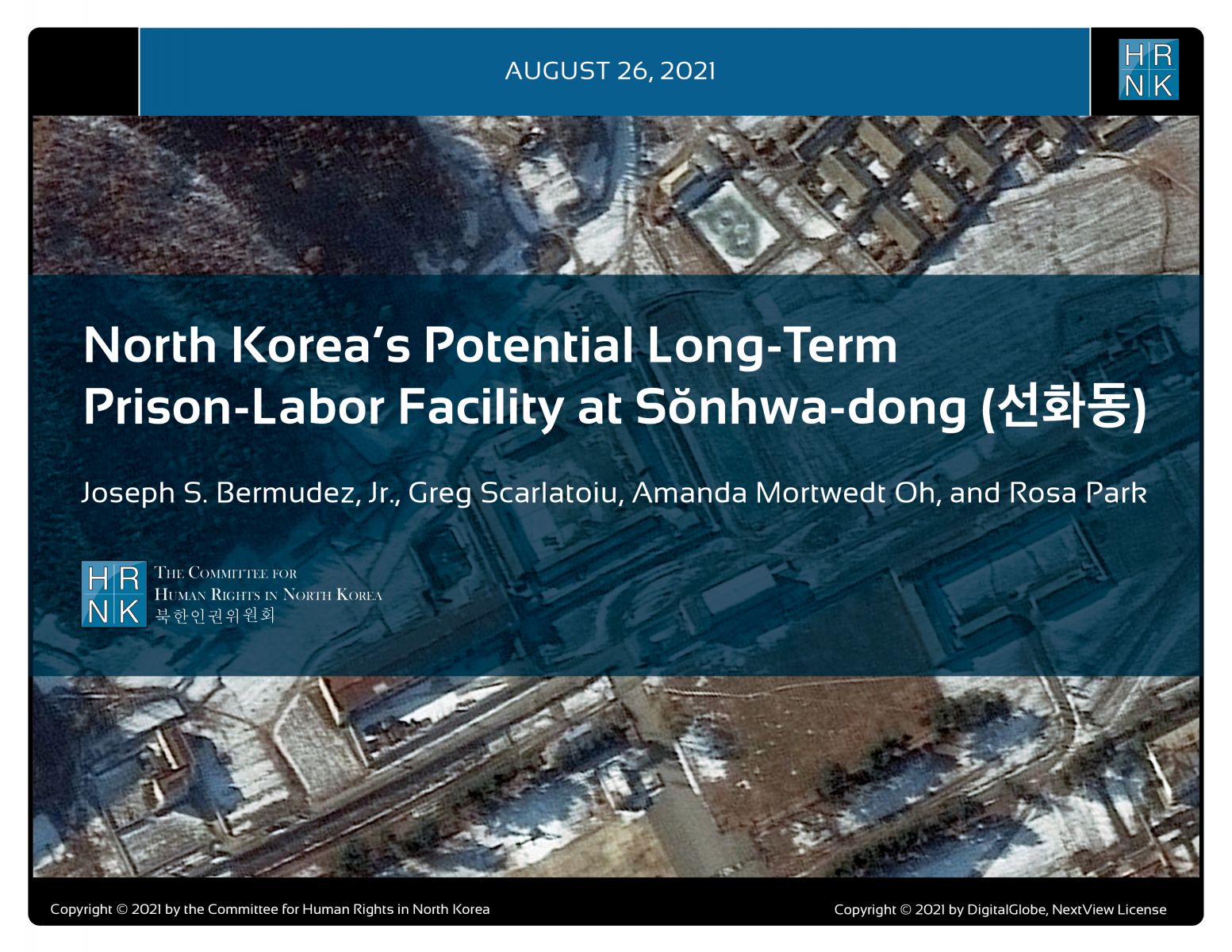
Through satellite imagery analysis and witness testimony, HRNK has identified a previously unknown potential kyo-hwa-so long-term prison-labor facility at Sŏnhwa-dong (선화동) P’ihyŏn-gun, P’yŏngan-bukto, North Korea. While this facility appears to be operational and well maintained, further imagery analysis and witness testimony collection will be necessary in order to irrefutably confirm that Sŏnhwa-dong is a kyo-hwa-so.
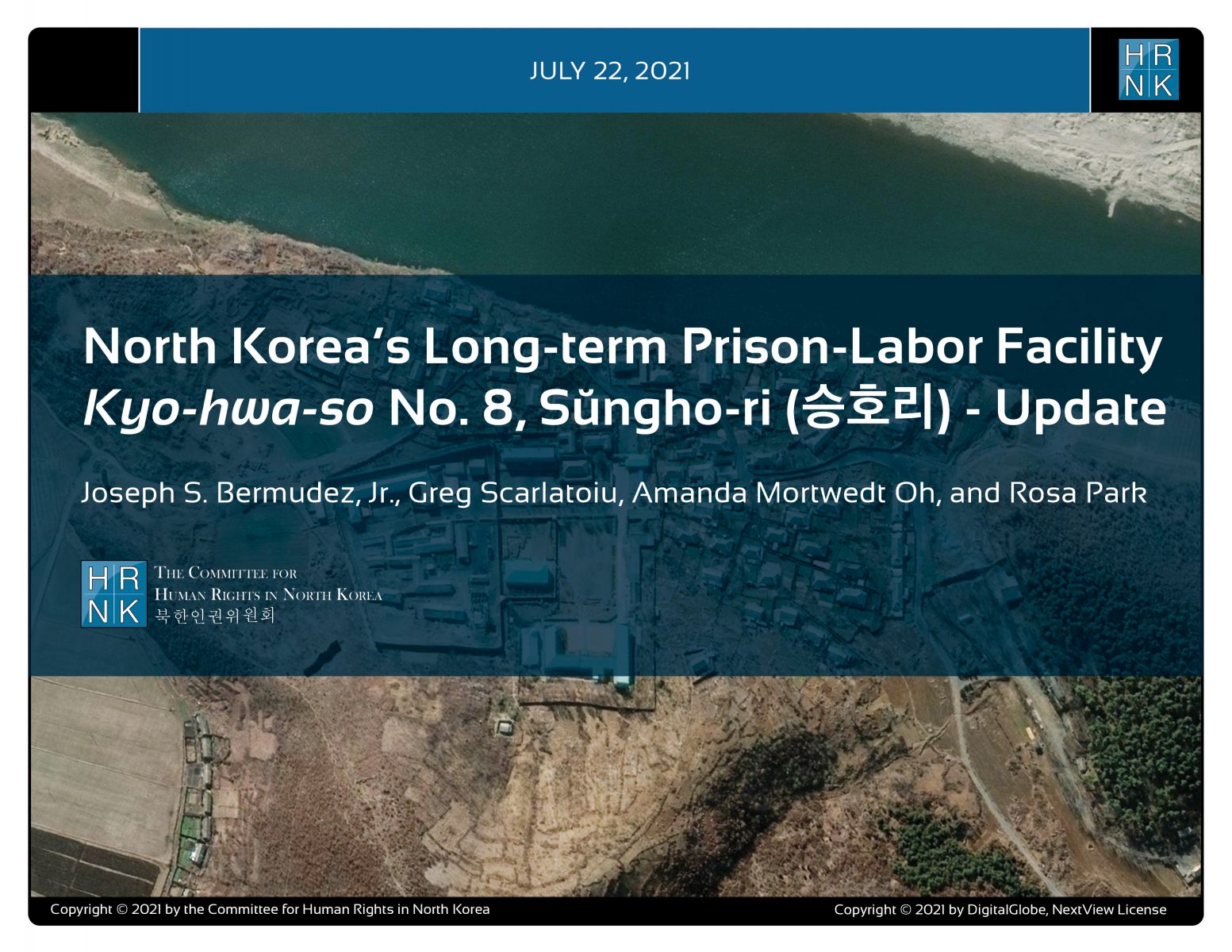
Jul 22, 2021
"North Korea’s Long-term Prison-Labor Facility Kyo-hwa-so No. 8, Sŭngho-ri (승호리) - Update" is the latest report under a long-term project employing satellite imagery analysis and former political prisoner testimony to shed light on human suffering in North Korea's prison camps.
Jul 01, 2021
Human Rights in the Democratic Republic of Korea: The Role of the United Nations" is HRNK's 50th report in our 20-year history. This is even more meaningful as David Hawk's "Hidden Gulag" (2003) was the first report published by HRNK. In his latest report, Hawk details efforts by many UN member states and by the UN’s committees, projects and procedures to promote and protect human rights in the DPRK. The report highlights North Korea’s shifts in its approach
South Africa’s Apartheid and North Korea’s Songbun: Parallels in Crimes against Humanity by Robert Collins underlines similarities between two systematically, deliberately, and thoroughly discriminatory repressive systems. This project began with expert testimony Collins submitted as part of a joint investigation and documentation project scrutinizing human rights violations committed at North Korea’s short-term detention facilities, conducted by the Committee for Human Rights